
Reviewed by Dr. Seetha Lekshmi, M.D. (Ayurveda), Akanta Ayurveda & Yoga Cherai
Most people booking a Panchakarma programme know roughly why they are going. Far fewer know what the days will actually look like.
That gap causes real anxiety. People arrive expecting either a spa holiday or something clinical and severe, and neither picture is accurate. Panchakarma is a structured medical process with a defined sequence — preparation, main procedure, recovery — and knowing that sequence in advance changes the experience considerably.
This guide walks through what happens from arrival to departure: what each stage does, how long it takes, how you are likely to feel, and why the parts that seem least dramatic are often the most important.
What Panchakarma Actually Means
Pancha means five. Karma means action. The name refers to five specific therapeutic procedures described in the classical texts:
- Vamana — therapeutic emesis, principally for Kapha disorders
- Virechana — purgation therapy, principally for Pitta
- Basti — medicated enema, the primary treatment for Vata
- Nasya — nasal administration of medicated substances
- Raktamokshana — bloodletting or blood purification
You will not receive all five. This is the most common misunderstanding. Your physician selects one or two based on your constitution and the specific imbalance being treated. A guest with Vata-dominant joint pain and a guest with Pitta-dominant skin inflammation will follow entirely different programmes under the same name.
Equally important: the five procedures themselves occupy only a small portion of your stay. The majority of the time is spent on preparation before them and recovery afterwards — and skipping either is what makes Panchakarma ineffective or uncomfortable.
For how this process affects stress specifically, see our article on how Panchakarma works for stress relief.
If you are considering a programme, our guide to what happens during Panchakarma, day by day sets out the full sequence from arrival to post-care.
The Three Stages
Every Panchakarma programme follows the same architecture, whatever the specific therapies involved.
| Stage | What it does | Typical duration |
| Purvakarma | Preparation — loosening toxins and mobilising them | 3–7 days |
| Pradhanakarma | The main procedure — eliminating what has been mobilised | 1–3 days |
| Paschatkarma | Recovery — rebuilding digestion and strength | 5–10 days |
Notice the proportions. Preparation and recovery take far longer than the procedure itself. Programmes that compress or omit these stages are offering therapy sessions, not Panchakarma.
This is also why a minimum of seven nights is required for anything meaningful, and why fourteen to twenty-one nights allows the full sequence to be done properly.
Day 1 — Arrival and Assessment
Nothing therapeutic happens on day one. This surprises people who arrive expecting to begin immediately.
What happens:
Your consulting physician takes a full history — presenting complaint, duration, previous treatment, current medication, digestion, sleep, appetite, bowel pattern, menstrual history where relevant. This takes time because the questions are diagnostic rather than administrative.
Prakriti assessment establishes your natural constitution: the proportion of Vata, Pitta and Kapha you were born with. This is fixed and does not change across your lifetime.
Vikriti assessment establishes your current state of imbalance — how far you have moved from that baseline, and in which direction. Treatment addresses the gap between the two.
Nadi Pariksha (pulse examination), tongue examination and abdominal palpation form part of this assessment.
Your treatment plan is then written: which procedures, which medicated oils and preparations, what diet, how many days for each stage.
How you will feel: usually tired from travel, sometimes impatient to start. Rest is appropriate. Light food, early night.
Days 2–7 — Purvakarma: Preparation
This is the stage people underestimate, and the stage that determines whether the rest works.
The purpose is to loosen accumulated toxins (Ama) from the tissues and move them toward the digestive tract, where they can be eliminated. Toxins lodged deep in tissue cannot be removed directly — they must first be mobilised.
Two processes do this, in sequence, every day.
Snehana — Oleation
Internal oleation means drinking medicated ghee in gradually increasing doses on an empty stomach, usually for three to seven days. The dose starts small and increases daily.
This is the least pleasant part of Panchakarma and worth being honest about. The taste is heavy, the feeling of fullness lasts several hours, and appetite drops sharply. By day three or four most people find it genuinely difficult.
It is also essential. The ghee acts as a carrier, penetrating tissue and dissolving fat-soluble toxins so they can be drawn out.
Signs your physician is watching for: oily skin, softened stool, aversion to the ghee itself, and lightness in the body. These indicate saturation — the point at which oleation has done its work and can stop.
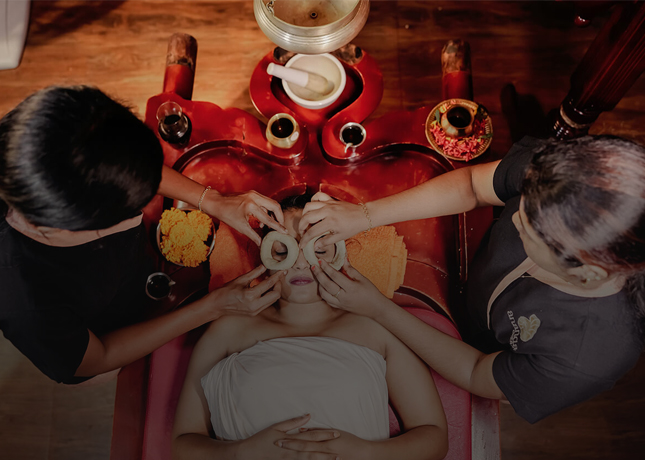
External oleation is Abhyanga — synchronised full-body massage with warm medicated oil, usually performed by two therapists working in rhythm. Typically 45–60 minutes daily.
This is the part guests enjoy most, and it does far more than relax. The oil penetrates the skin into deeper tissue, improves circulation, calms the nervous system and loosens what internal oleation has begun to dissolve.
Swedana — Fomentation
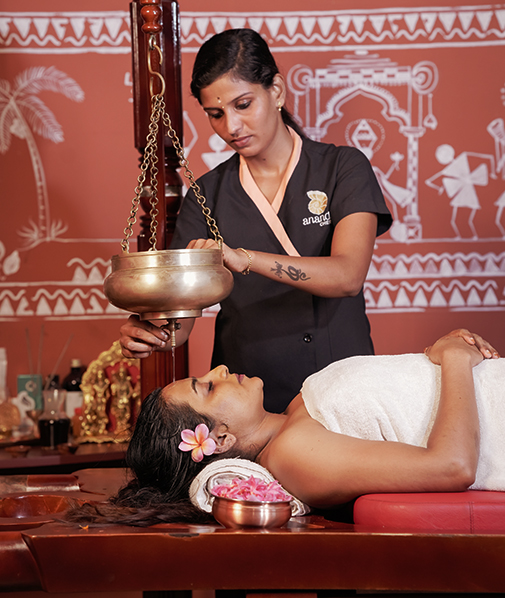
Immediately after Abhyanga, heat is applied — usually a herbal steam chamber, sometimes localised warm poultices (Kizhi) depending on your condition.
Oil loosens; heat opens the channels and drives the loosened material toward the gut. Classical Ayurveda almost never uses one without the other. The sequence is always oil first, heat second.
How you will feel during Purvakarma:
- Days 2–3: relaxed from the massage, slightly heavy from the ghee
- Days 4–5: appetite noticeably reduced, sometimes mild headache or lethargy as toxins mobilise
- Days 6–7: heaviness peaks — this is expected and indicates the preparation is working
Mild fatigue, altered bowel movements and occasional emotional restlessness during this phase are normal. Tell your physician about anything you notice; these observations inform the timing of the next stage.
Day 8 — Pradhanakarma: The Main Procedure
The shortest stage, and the one everyone focuses on.
Whichever procedure has been selected, the day is cleared for it. No other therapy, no activity, complete rest afterwards.
If Virechana (purgation): a herbal purgative is given in the morning after assessment. Elimination begins within a few hours and continues through the day. The number of episodes is monitored — it indicates whether the response is adequate, excessive or insufficient.
If Basti (medicated enema): administered in a course rather than once. Kashaya Basti (herbal decoction) and Anuvasana Basti (oil-based) alternate over eight, fifteen or thirty days depending on the protocol. This is the principal treatment for Vata conditions, including most back and joint complaints.
If Nasya: medicated oil administered through the nostrils, usually over seven days, preceded by facial massage and steam. Used for conditions affecting the head, neck, sinuses and nervous system.
If Vamana: therapeutic emesis, preceded by Kapha-increasing foods the previous evening. Used less frequently and only where clearly indicated.
How you will feel: depleted. That is the expected response, not a complication. Most guests sleep heavily that night and describe the following morning as unusually clear — lighter in the body, calmer in the mind.
Days 9–14 — Paschatkarma: Recovery
The stage most commonly rushed, and the one that determines whether results last.
After elimination, your digestive fire (Agni) is weak. Tissue has been cleared but not yet rebuilt. Eating normally at this point undoes much of what the procedure achieved — and can cause more discomfort than the procedure itself.
Samsarjana Krama — Graduated Diet
Food is reintroduced in defined stages over several days:
- Peya — thin rice gruel, mostly liquid
- Vilepi — thicker gruel
- Akrita Yusha — unspiced lentil soup
- Krita Yusha — lightly spiced lentil soup
- Normal diet — gradually resumed
Each stage lasts one to three meals depending on your response. The progression is not arbitrary — it rebuilds digestive capacity in step with what the body can actually process.
Rasayana — Rejuvenation
Once digestion is stable, rejuvenative preparations are introduced. These rebuild tissue and consolidate the benefit of the cleansing. Which formulations are used depends on your constitution and the condition treated.
Gradual Resumption
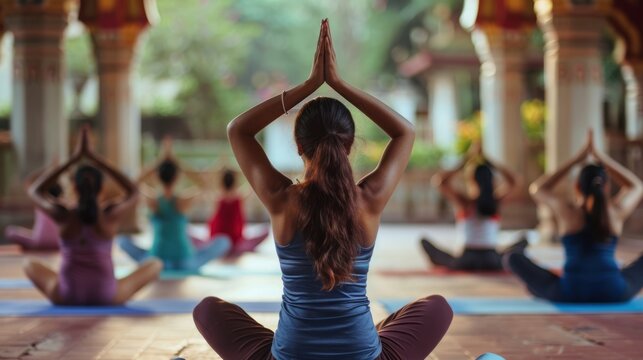
Yoga and light movement return in this phase, initially very gentle. Rest, early nights and a quiet routine matter more than activity.
How you will feel: by days 10–12, most guests describe steadier energy, clearer thinking and improved sleep. Appetite returns properly. Many notice their original symptoms have lessened, though in chronic conditions the fuller benefit appears over the weeks following departure.
After You Leave
Panchakarma does not end at checkout. The weeks afterwards are when the body consolidates what has been done.
Typical post-departure guidance:
- Continue prescribed herbal preparations
- Maintain simple, warm, freshly prepared food for at least two weeks
- Avoid alcohol, cold drinks and heavy or processed food during this period
- Keep to a regular daily routine (Dinacharya) — consistent waking, eating and sleeping times
- Resume exercise gradually
- Continue daily self-massage where advised
Your physician provides written guidance specific to your treatment. Follow-up consultation is available on request.
The frequent question is how long the benefit lasts. Where the underlying cause was a specific imbalance now corrected, results can be long-lasting. Where the cause is ongoing — a stressful occupation, irregular routine, poor sleep — Panchakarma resolves the accumulated effect but not the source. Many guests return annually for this reason, often timed to the Karkidakam monsoon season, traditionally considered the most favourable period for detoxification.
How Long Should You Stay?
| Duration | What is possible |
| 7 nights | Abbreviated Purvakarma, one main procedure, basic post-care. A meaningful minimum. |
| 14 nights | Full Purvakarma, main procedure, proper Samsarjana Krama and Rasayana. The standard recommendation. |
| 21 nights | Extended preparation, potentially two procedures, thorough recovery. Best suited to chronic conditions. |
| 28 nights | Comprehensive programme for long-standing or complex conditions. |
Shorter than seven nights is not Panchakarma. It may still be beneficial as a rejuvenation or stress-relief programme — but it is a different thing, and honest practitioners say so.
Our wellness programmes are structured around these durations.
Who Should Not Undergo Panchakarma
Panchakarma is a medical process, not a wellness package. It is unsuitable or requires modification for:
- Pregnancy and the immediate post-natal period
- Acute infection or fever
- Severe cardiac conditions or uncontrolled hypertension
- Advanced or unstable diabetes
- Recent surgery
- Severe debility or very advanced age
- Certain psychiatric conditions
- Active cancer treatment, unless coordinated with the treating oncologist
Disclose all current medication and diagnoses at consultation. Some herbal preparations interact with anticoagulants, antihypertensives and thyroid medication.
An online consultation before travelling establishes whether Panchakarma is appropriate and allows your programme to be prepared in advance.
Before You Book
The questions worth asking any Panchakarma centre:
- Is the programme prescribed by a qualified Ayurvedic physician, or selected from a menu?
- Is Prakriti and Vikriti assessment carried out before treatment begins?
- Is Samsarjana Krama — the graduated post-treatment diet — actually followed?
- Is the minimum stay honest about what can be achieved?
- Is post-departure guidance provided?
At Akanta Ayurveda & Yoga Cherai, programmes are prescribed by physicians continuing a lineage established in 1952, when our founder served as palace physician to the Kochi Royal family. Every guest is assessed individually before treatment, and no two programmes are identical.
For guests whose primary concern is a specific condition, see our programmes for back pain, spine and neck disorders, stroke rehabilitation and Parkinson’s disease.
Book an online consultation · View wellness programmes
Frequently Asked Questions
Is Panchakarma painful?
No. The most difficult part for most people is internal oleation — drinking medicated ghee — which is unpleasant rather than painful. The main procedures are tiring but not painful.
Will I feel unwell during the programme?
Mild fatigue, reduced appetite, occasional headache and emotional restlessness are common during Purvakarma as toxins mobilise. These are expected responses and generally pass. Report anything you notice to your physician.
Can I work during Panchakarma?
Not meaningfully. Rest is part of the treatment, and the Pradhanakarma day requires complete rest. Guests who attempt to work through a programme consistently report weaker results.
What should I bring?
Loose, comfortable cotton clothing that you do not mind staining with oil. Everything required for treatment is provided.
Will I lose weight?
Some guests do, particularly where excess Kapha was present. Weight loss is a possible outcome, not the purpose. Guests who are underweight may gain during the Rasayana phase.
Can Panchakarma be done alongside my regular medication?
Usually, but never stop prescribed medication without consulting the doctor who prescribed it. Your Ayurvedic physician plans around existing treatment once informed.
How often can Panchakarma be repeated?
Once a year is typical for maintenance. For chronic conditions, your physician may recommend a different interval.
Is there a best time of year?
Panchakarma is offered year-round. The monsoon months — the Karkidakam season — are traditionally considered most favourable, as the humid climate is thought to open the channels and improve receptiveness to therapy.
This article is for general information and does not replace individual medical assessment. Panchakarma should be undertaken only under the supervision of a qualified Ayurvedic physician.