
Written by Dr. Rajeev Kumar, BAMS — twenty years in Ayurvedic management of spine, neck and joint disorders. Reg. No. 8674.
Patients rarely come to me because of their neck. They come because of a headache that will not resolve, or a numbness in two fingers they cannot explain, or a shoulder that aches by four in the afternoon. The neck is where the problem lives, but it is seldom where the complaint begins.
Cervical spondylosis is one of the most common conditions I see, and one of the most misunderstood. The name sounds alarming. Patients hear “spondylosis” and picture something degenerative and irreversible. What it actually describes is age-related change in the cervical spine — the kind that shows on scans of most people past forty, many of whom have no symptoms at all.
The question worth asking is not whether you have spondylotic change. It is why that change is causing you pain when it causes others none.
What Cervical Spondylosis Actually Is
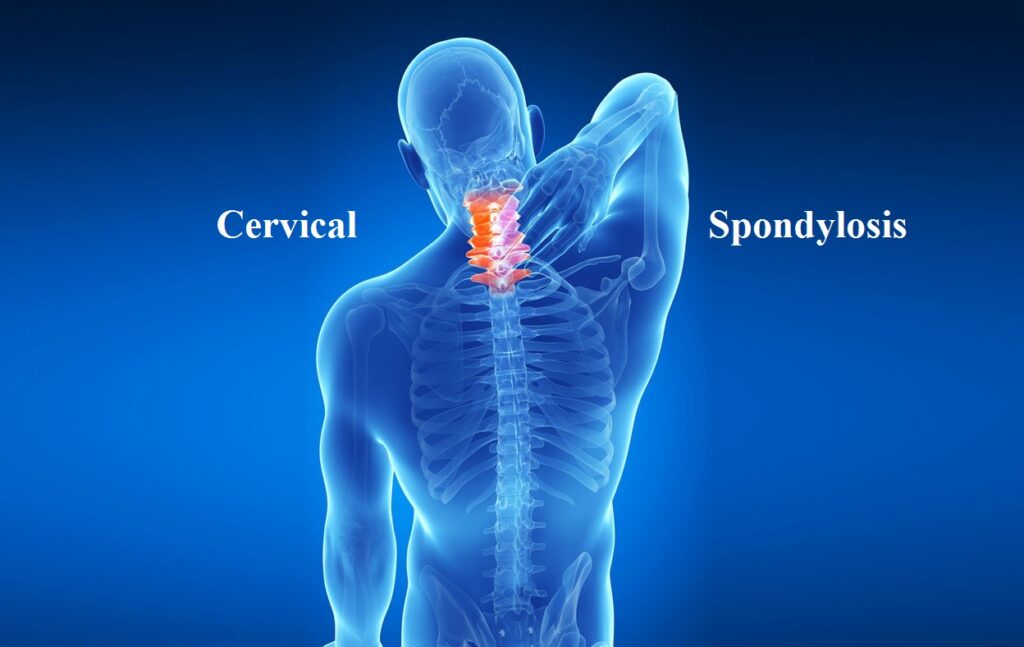
The cervical spine is seven vertebrae carrying a head that weighs roughly five kilograms, through a range of movement greater than anywhere else in the spine. Between each vertebra sits a disc; between each pair of vertebrae run the nerve roots that supply the shoulders, arms and hands.
With time, those discs lose water content and thin. The vertebrae respond by forming small bony outgrowths — osteophytes — at the margins. The joint spaces narrow. This is cervical spondylosis.
In itself it is not a disease. It is what a cervical spine looks like after decades of use, much as grey hair is what hair looks like after decades of growth.
Symptoms arise when the change begins to affect surrounding structures:
- Narrowed spaces compress a nerve root, producing pain or numbness down the arm
- Stiffened joints restrict movement, so muscles work harder and fatigue
- Muscle guarding becomes chronic, which itself produces pain
- Occasionally, significant narrowing affects the spinal cord — which is a different and more serious situation
What determines whether you have symptoms is rarely the degree of change on the scan. It is posture, muscle condition, how you sleep, how long you hold one position, and in Ayurvedic terms, the state of Vata in that region.
Why Desk Work Does This
The mechanical explanation is simple enough that most patients recognise themselves in it immediately.
The head sits balanced on the cervical spine. In neutral position, carrying it costs the neck muscles very little. For every two and a half centimetres the head moves forward of that neutral line, the effective load on the cervical spine roughly doubles.
A head held forward over a laptop for three hours is not carrying five kilograms. It is carrying the equivalent of twelve to eighteen.
What follows is predictable:
The deep neck flexors — the muscles designed to hold the head in position — weaken from disuse. The upper trapezius and levator scapulae take over work they were not built for, and become chronically tight. The thoracic spine stiffens into flexion, which pushes the head further forward still, which increases the load again.
By the time pain appears, this pattern has usually been established for years.
Phone use compounds it. Looking down at a screen held at waist height places the neck in greater flexion than any desk ever does. Most people now spend more hours in that position than at a desk.
The Ayurvedic View: Greeva Stambha
In classical Ayurveda, conditions of the cervical region are described as Greeva Stambha — greeva meaning neck, stambha meaning stiffness or rigidity. The related term Vishwachi describes pain radiating down the arm, which corresponds closely to what modern practice calls cervical radiculopathy.
Both are understood as disorders of Vata dosha.
Vata governs movement, the nervous system, and everything in the body that is dry, light, cold and mobile. When Vata becomes aggravated in a particular region, it produces a characteristic pattern — and in the cervical spine that pattern is recognisable:
- Stiffness that is worst on waking and eases with gentle movement
- Pain that is worse in cold weather and better with warmth
- A dry, cracking quality when the neck is turned
- Pain that shifts location or comes and goes without obvious cause
- Symptoms that worsen with irregular routine, travel, poor sleep or stress
- Tingling or numbness — Vata governs nerve conduction
This is why Ayurvedic treatment of the neck relies so heavily on warmth, oil and regularity. Vata is dry, cold and erratic. The therapies that settle it are oily, warm and consistent. Almost everything that follows in this article rests on that principle.
Not every neck complaint is Vata-driven. Pain with heat, burning and inflammation suggests Pitta involvement. Heaviness, swelling and a dull persistent ache suggests Kapha. But in sedentary patients with gradual onset, Vata predominates in the large majority of cases.
Why It Worsens in Cooler Months
Patients who have lived with cervical spondylosis for some years often tell me they can predict the weather by their neck. They are not imagining it.
Vata increases naturally in autumn and winter — the seasons share Vata’s qualities of dryness, cold and mobility. From October onwards in Kerala, and more sharply still in north India or abroad, the same neck that was manageable in August becomes stiff and painful.
Three things happen together:
Cold causes muscular contraction. Muscles that were already tight tighten further, and circulation to them reduces.
Reduced circulation means less nourishment to tissue that is already compromised, and slower clearance of the metabolic products that accumulate in chronically contracted muscle.
Behaviour changes. People move less in cooler months, spend longer indoors and seated, and often sleep in more guarded positions.
The practical implication: if your neck troubles you seasonally, the time to act is before the season, not during it. Guests who begin treatment in September generally have a far easier winter than those who arrive in January.
Five Things That Help, Starting Today
These are the measures I give patients before they leave, and the ones that determine whether treatment holds.
-
Change position, not posture
The common advice is to sit up straight. In practice, nobody holds any posture for three hours, and the attempt usually produces a different set of tight muscles.
What works better is movement. Stand and move for two minutes every half hour. A perfect chair used for an unbroken three-hour stretch does more harm than an ordinary chair with regular breaks.
Set a reminder if you need to. The neck does not mind which position you are in nearly as much as it minds staying there.
-
Raise the screen
The top of your monitor should sit at roughly eye level, so the screen is viewed slightly downward with the head neutral. Most laptop users are looking down at twenty to thirty degrees, which is where the load multiplies.
A stand and an external keyboard cost very little and solve most of this. For phone use, raise the phone rather than lowering the head.
-
Warm oil to the neck and upper back
The single most useful home measure for Vata-type neck stiffness.
How: warm sesame oil gently — comfortable to the touch, never hot. Apply to the back and sides of the neck, the upper trapezius and between the shoulder blades. Massage in slow, firm circular movements for five to ten minutes. Leave for twenty minutes, then bathe in warm water.
Oils: plain sesame oil is a reliable base for most Vata presentations. Mahanarayana taila, Dhanwantharam taila and Ksheerabala taila are the classical preparations used for cervical conditions, but the correct choice depends on your constitution and whether nerve symptoms are present — this is worth a physician’s judgement rather than guesswork.
Follow with warmth. A hot water bottle or warm towel for ten minutes after the oil. Oil loosens; heat carries it deeper. Classical practice almost never uses one without the other.
Frequency: daily is ideal. Three or four times a week gives noticeable benefit.
Do not apply oil during acute inflammation, fever, or if there is swelling and heat in the area.
-
Three movements, done gently
Not stretches held forcefully — the neck responds badly to that. Slow, controlled, within comfortable range.
Chin tucks. Sitting upright, draw the chin straight back as though making a double chin, without tilting the head. Hold three seconds. Ten repetitions. This activates the deep neck flexors that desk work switches off, and it is the single most useful exercise for this condition.
Shoulder blade squeezes. Draw the shoulder blades together and slightly down. Hold five seconds. Ten repetitions. Addresses the thoracic stiffness that pushes the head forward.
Slow neck rotation. Turn the head gently to one side, as far as is comfortable, hold five seconds, return. Five each side. Never force, never circle the head.
Twice daily. Three minutes. Done consistently, this does more than any treatment done occasionally.
-
Fix your pillow
A third of your life is spent in whatever position your pillow dictates, and most people have never thought about it.
Side sleeping: the pillow should fill the space between your ear and the mattress, keeping the neck level with the spine. Too thin and the head drops; too thick and the neck bends upward.
Back sleeping: a thinner pillow supporting the curve of the neck, not pushing the head forward.
Front sleeping: this holds the neck rotated for hours at a stretch. If you have cervical symptoms, it is worth the effort of changing this habit.
When to Seek Assessment
Most mechanical neck pain settles with the measures above. Some presentations should not be managed at home.
Seek assessment if you have:
- Pain radiating below the elbow, particularly into the hand
- Numbness, tingling or weakness in the arm or hand
- Clumsiness in the hands — difficulty with buttons, dropping objects
- Unsteadiness when walking, or a change in gait
- Any disturbance of bladder or bowel function — this requires immediate medical attention
- Neck pain following a fall or road accident
- Pain that wakes you at night and does not ease with position change
- Fever or unexplained weight loss alongside neck pain
- Symptoms persisting beyond six weeks despite consistent home care
The items concerning hand function and gait matter particularly. They can indicate cervical myelopathy — compression of the spinal cord rather than a nerve root — which is a different situation requiring prompt specialist assessment, not Ayurvedic management alone.
I say this plainly because I would rather a reader present to a neurosurgeon unnecessarily than delay a diagnosis that needed one.
Clinical Ayurvedic Treatment
Where home measures are insufficient, treatment goes considerably further. The therapies below cannot be reproduced at home and require clinical supervision.
Greeva Basti
A reservoir of herbal dough is built on the back of the neck and filled with warm medicated oil, which is retained for thirty to forty-five minutes and replenished as it cools.
The value is in duration. A massage delivers oil for a few minutes; Greeva Basti holds warm medicated oil in sustained contact with the cervical region for the better part of an hour. For chronic stiffness and nerve irritation it is the most directly useful therapy we have for this condition.
Nasya
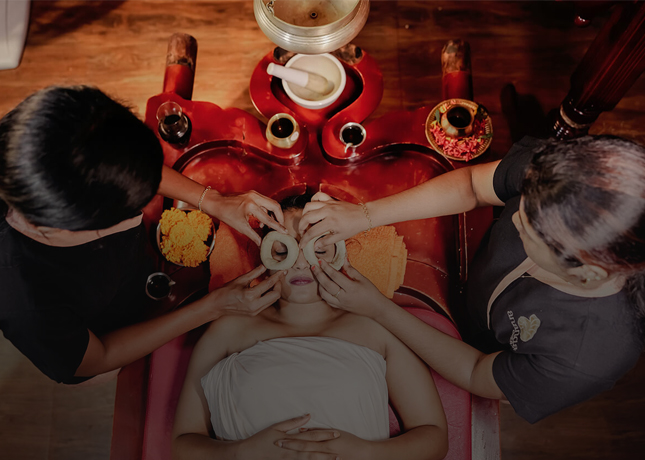
Medicated oil administered through the nostrils, following facial massage and steam.
Classical texts describe the nose as the gateway to the head, and conditions affecting the head, neck and cervical region are treated through this route. In practice, Nasya is particularly useful where neck complaints come with headache, heaviness of the head or disturbed sleep.
Usually given as a course over seven days.
Abhyanga and Swedana
Full-body synchronised oil massage followed by herbal steam. Addresses the whole Vata picture rather than the neck in isolation — relevant because cervical complaints in sedentary patients rarely occur without broader Vata aggravation.
Kizhi
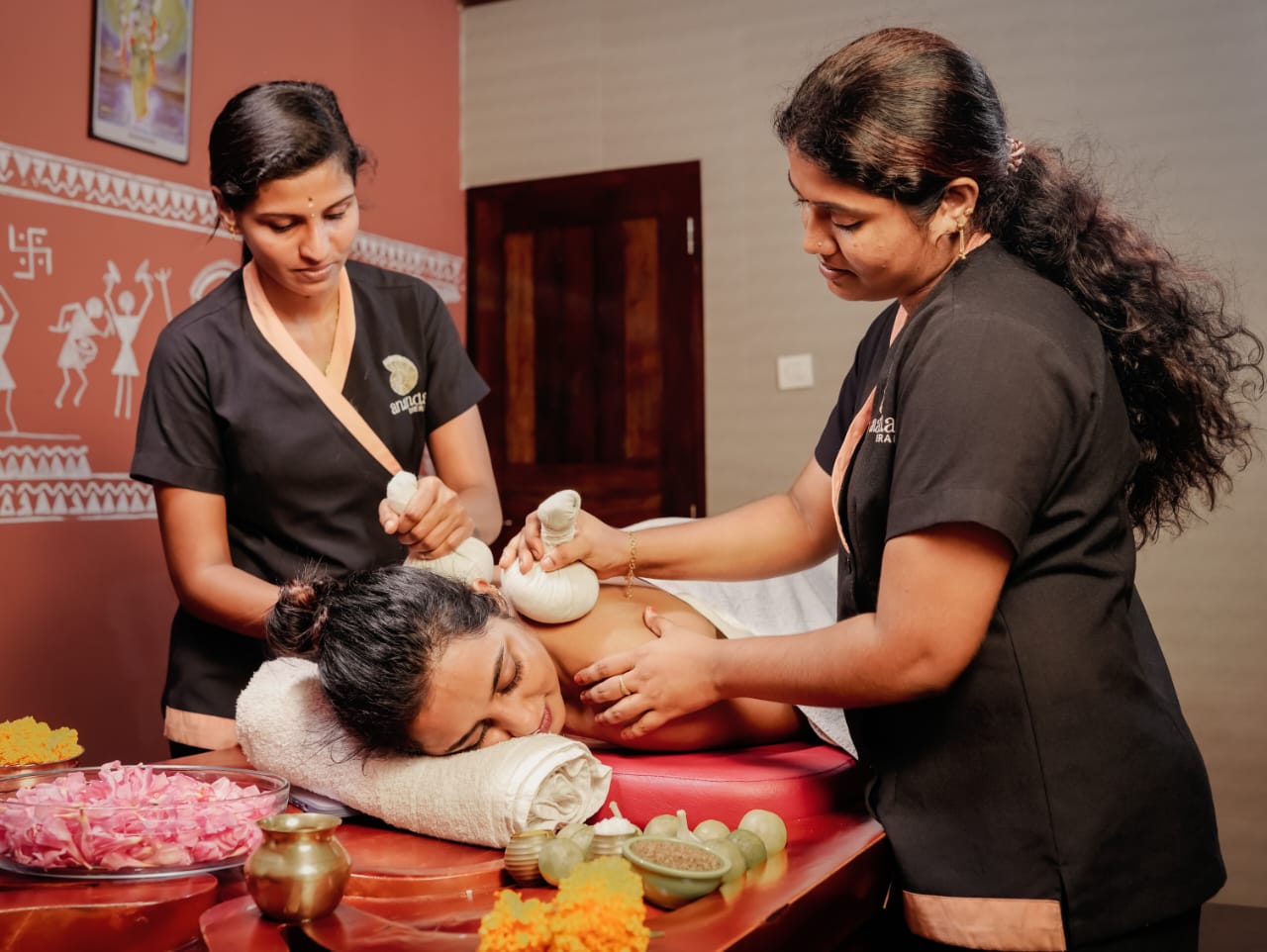
Warm herbal, powder or leaf boluses applied to the neck and upper back. Useful where stiffness and muscular guarding dominate the presentation.
Vasthi
Medicated enema — the principal treatment for Vata disorders in classical Ayurveda, and the one most people are surprised to find prescribed for a neck complaint.
The logic is that Vasthi addresses Vata at its primary seat rather than only where symptoms appear. For chronic or recurrent cervical conditions it is often what produces lasting change where local therapy alone has not.
Vasthi is administered as a course and requires preparation and post-care. It forms part of a full Panchakarma programme rather than a standalone session.
What a Treatment Programme Involves
Every programme begins with consultation and Prakriti assessment — your constitution, your current imbalance, your history, your occupation and daily routine. Treatment is prescribed from that, not from the diagnosis alone. Two patients with identical scans receive different programmes.
Duration:
- Seven nights — a meaningful minimum. Allows preparation, local therapy and basic post-care.
- Fourteen nights — the standard recommendation for established cervical spondylosis. Permits a full course of Greeva Basti and Nasya with proper preparation and recovery.
- Twenty-one nights or more — for long-standing presentations, or where nerve symptoms are prominent.
Shorter stays can relieve symptoms. They rarely change the underlying pattern.
Our spine and neck disorder programmes are structured around these durations, and patients also receive a home routine to continue afterwards — which is, in my experience, what determines whether the benefit holds.
Frequently Asked Questions
Is cervical spondylosis reversible?
The structural change is not reversed. The symptoms very often are. This distinction matters: patients are frequently told nothing can be done because the scan will not change, which confuses the radiology with the clinical picture. Most people with spondylotic change on imaging have no pain at all.
How long before I feel improvement?
With consistent home measures, most patients notice reduced stiffness within two to three weeks. Clinical treatment usually produces noticeable change within the first week, with fuller benefit over the following month.
Should I use a cervical collar?
Only briefly, and only if specifically advised. Prolonged collar use weakens the very muscles that need to be stronger, and tends to worsen the underlying problem.
Is heat or cold better?
For Vata-type presentations — the large majority — heat. Cold is appropriate only where there is acute inflammation with visible swelling and warmth, which is uncommon in this condition.
Can I exercise with cervical spondylosis?
Yes, and you should. Avoid overhead pressing, heavy loads on the shoulders, and any movement that forces the neck into extension. Walking, swimming and the exercises described above are all appropriate.
Will Ayurvedic treatment interfere with my current medication?
Generally no, but disclose everything you are taking at consultation. Some herbal preparations interact with anticoagulants and antihypertensives. Never stop prescribed medication without consulting the doctor who prescribed it.
Can Ayurveda help a diagnosed disc prolapse?
It can relieve pain, muscular guarding and stiffness associated with disc conditions, and many patients do well. Whether it is appropriate depends on the degree of compression and whether neurological signs are present — that requires assessment, not a general answer.
Is yoga safe for cervical spondylosis?
Appropriate yoga is helpful. Inversions, headstand, shoulderstand and strong backbends are not, and I see a reasonable number of patients whose symptoms began or worsened in a general yoga class. Practice should be adapted to the condition — which is why yoga at Akanta is prescribed after assessment rather than offered as a standard class.
Where to Begin
If you are starting today: raise your screen, set a reminder to move every thirty minutes, do chin tucks twice a day, and apply warm sesame oil to the neck each evening.
Give it three weeks. A substantial proportion of mechanical neck pain responds to that alone.
If it does not — or if any of the warning signs above apply — the next step is proper assessment rather than more self-management.
At Akanta Ayurveda & Yoga Cherai, I assess each patient’s constitution and presentation before prescribing, and treatment is adapted as it progresses. If you would like to know whether a programme suits your condition before travelling, an online consultation is the simplest place to start.
For home management between treatments, see our guide to cervical spondylosis and neck pain from desk work.
Book an online consultation · Spine and neck treatment programmes
Dr. Rajeev Kumar, BAMS, has twenty years of clinical practice in Ayurvedic management of spine, neck and joint disorders at Akanta Ayurveda & Yoga Cherai. He is State President of the Patanjali Yoga Research Centre. Reg. No. 8674.
This article is for general information and does not replace individual medical assessment. Ayurvedic treatment should be undertaken under the guidance of a qualified physician.